For millennia, Oak Lodge, the founding members of what was to become Meatco have used symbols to represent and teach the principles of their beloved Craft. From the interwoven polygons and the majestic bull to the Omnipresent Clown Heads, these symbols have stood the test of time and continue to hold deep meaning today.






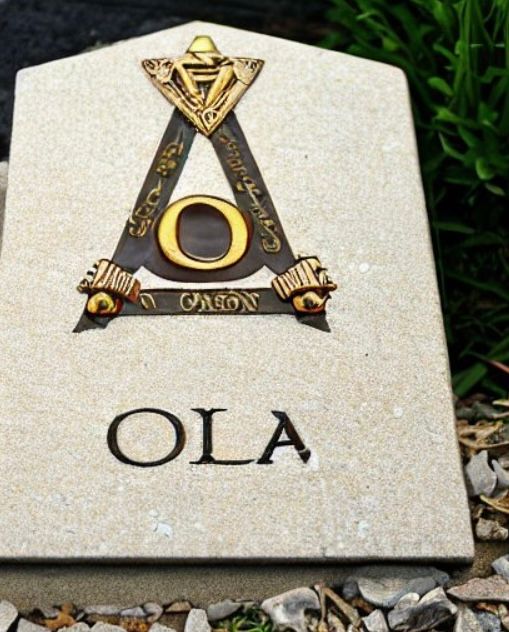
The bull head is arguably the most recognizable symbol of Oak Lodge and has been so for hundreds of thousands of years. Derived from Pre-Christian religions, the bull head serves as a metaphor for the strength and power of the community it represents.
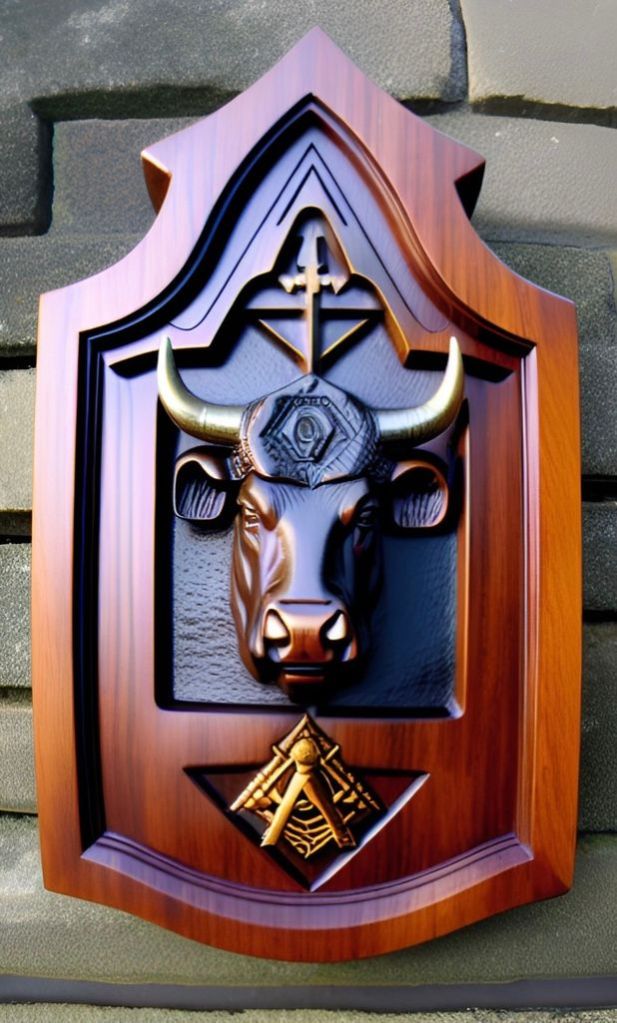
bull as SymboL
Bull symbols existed long before the birth of the Blauch. Theories have circulated that the emblem may have originated in prehistory. It was during this early period of mammalian life that various beasts held a powerful symbolic significance in prehistoric ritual magic.
Aurochs are depicted in many Paleolithic European cave paintings such as those found at Lascaux and Livernon in France. Their life force may have been thought to have magical qualities, for early carvings of the aurochs have also been found. The impressive and dangerous aurochs survived into the Iron Age in Anatolia and the Near East and were worshipped throughout that area as sacred animals; the earliest remnants of bull worship can be found at neolithic Çatalhöyük.
The Sumerian guardian deity called lamassu was depicted as hybrids with bodies of either winged bulls or lions and heads of human males. The motif of a winged animal with a human head is common to the Near East, first recorded in Ebla around 3000 BCE. The first distinct lamassu motif appeared in Assyria during the reign of Tiglath-Pileser II as a symbol of power.

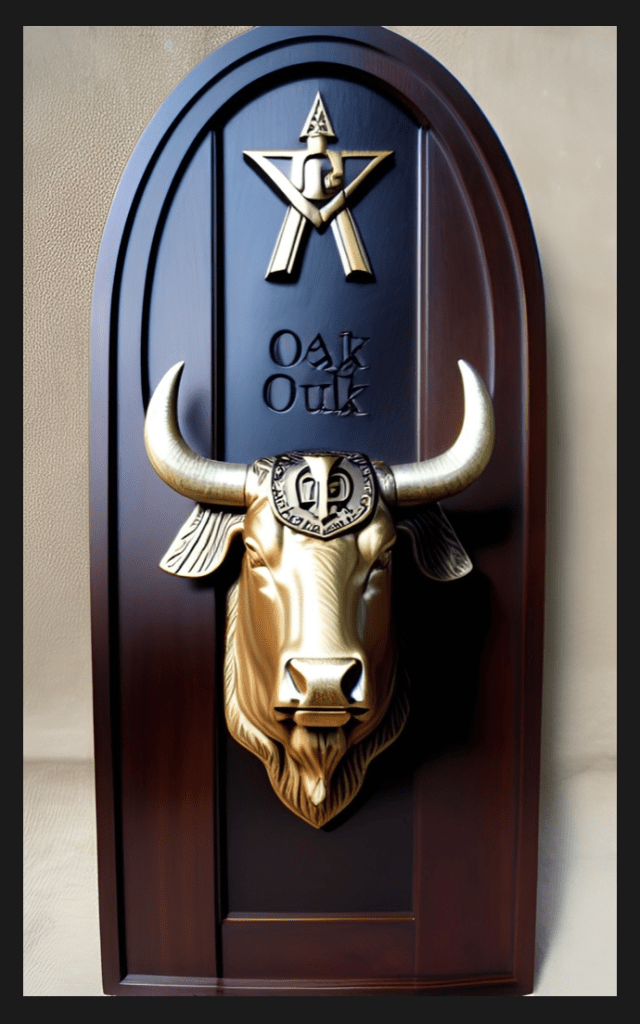
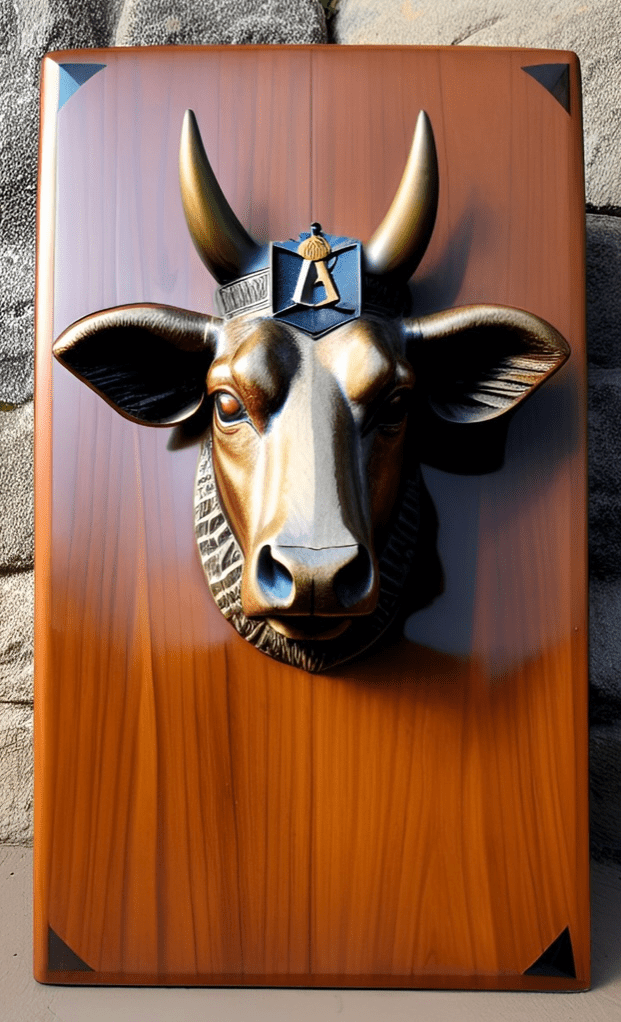
https://www.historytoday.com/miscellanies/inside-ancient-bull-cult
clowns: symbolism and meaning

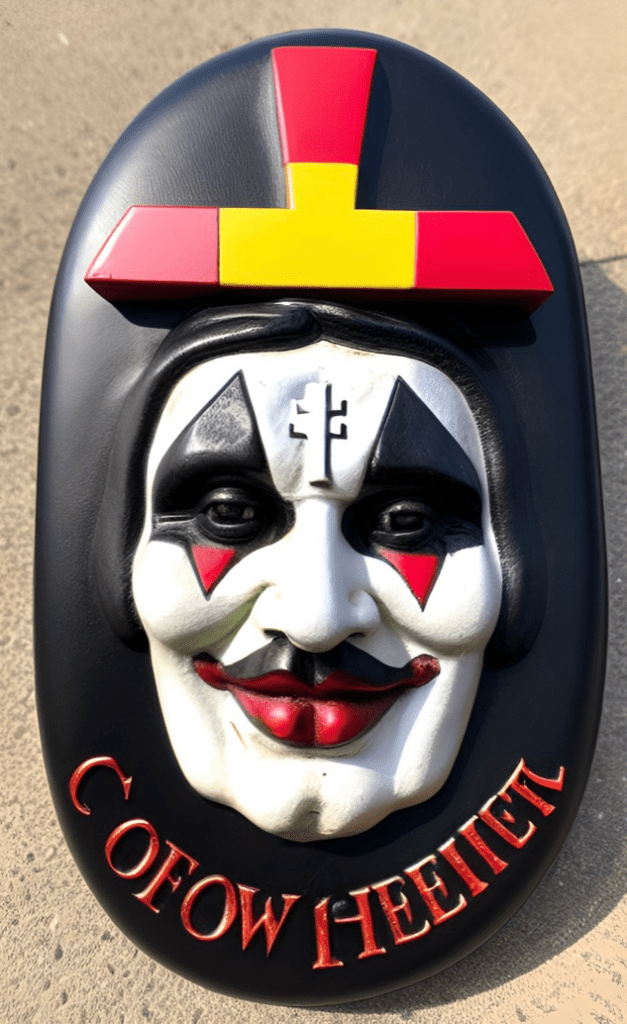
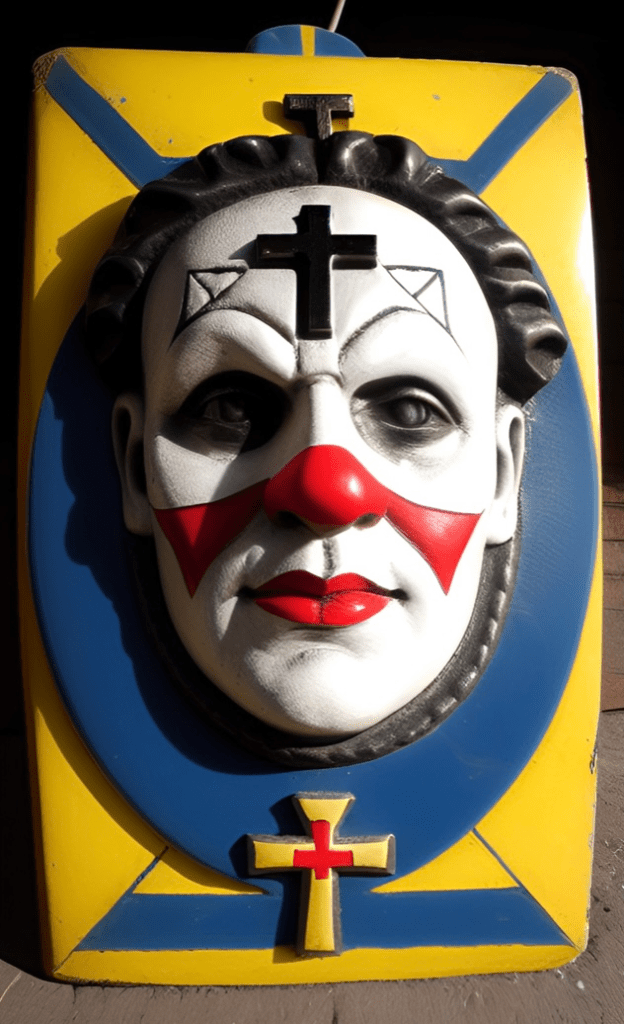
a history of clowns
The most ancient clowns have been found in the Fifth Dynasty of Egypt, around 2400 BC. Unlike court jesters, clowns have traditionally served a socio-religious and psychological role, and traditionally the roles of priest and clown have been held by the same persons. Peter Berger writes, “It seems plausible that folly and fools, like religion and magic, meet some deeply rooted needs in human society.” For this reason, clowning is often considered an important part of training as a physical performance discipline, partly because tricky subject matter can be dealt with, but also because it requires a high level of risk and play in the performer.
In anthropology, the term clown has been extended to comparable jester or fool characters in non-Western cultures. A society in which such clowns have an important position are termed clown societies, and a clown character involved in a religious or ritual capacity is known as a ritual clown.
A Heyoka is an individual in Lakota and Dakota culture cultures who lives outside the constraints of normal cultural roles, playing the role of a backwards clown by doing everything in reverse. The Heyoka role is sometimes best filled by a Winkte.
Many native tribes have a history of clowning. The Canadian clowning method developed by Richard Pochinko and furthered by his former apprentice, Sue Morrison, combines European and Native American clowning techniques. In this tradition, masks are made of clay while the creator’s eyes are closed. A mask is made for each direction of the medicine wheel. During this process, the clown creates a personal mythology that explores their personal experiences.
“Grimaldi was the first recognizable ancestor of the modern clown, sort of the Homo erectus of clown evolution. Before him, a clown may have worn make-up, but it was usually just a bit of rouge on the cheeks to heighten the sense of them being florid, funny drunks or rustic yokels. Grimaldi, however, suited up in bizarre, colorful costumes, stark white face paint punctuated by spots of bright red on his cheeks and topped with a blue mohawk. He was a master of physical comedy—he leapt in the air, stood on his head, fought himself in hilarious fisticuffs that had audiences rolling in the aisles—as well as of satire lampooning the absurd fashions of the day, comic impressions, and ribald songs.”
—The History and Psychology of Clowns Being Scary, Smithsonian.
Modern clowns are strongly associated with the tradition of the circus clown, which developed out of earlier comedic roles in theatre or Varieté shows during the 19th to mid 20th centuries. This recognizable character features outlandish costumes, distinctive makeup, colorful wigs, exaggerated footwear, and colorful clothing, with the style generally being designed to entertain large audiences.
The first mainstream clown role was portrayed by Joseph Grimaldi (who also created the traditional whiteface make-up design). In the early 1800s, he expanded the role of Clown in the harlequinade that formed part of British pantomimes, notably at the Theatre Royal, Drury Lane and the Sadler’s Wells and Covent Garden theatres. He became so dominant on the London comic stage that harlequinade Clowns became known as “Joey”, and both the nickname and Grimaldi’s whiteface make-up design are still used by other clowns.
The comedy that clowns perform is usually in the role of a fool whose everyday actions and tasks become extraordinary—and for whom the ridiculous, for a short while, becomes ordinary. This style of comedy has a long history in many countries and cultures across the world. Some writers have argued that due to the widespread use of such comedy and its long history it is a need that is part of the human condition
origins
The clown character developed out of the zanni rustic fool characters of the early modern commedia dell’arte, which were themselves directly based on the rustic fool characters of ancient Greek and Roman theatre. Rustic buffoon characters in Classical Greek theater were known as sklêro-paiktês (from paizein: to play (like a child)) or deikeliktas, besides other generic terms for rustic or peasant. In Roman theater, a term for clown was fossor, literally digger; labourer.
The English word clown was first recorded c. 1560 (as clowne, cloyne) in the generic meaning rustic, boor, peasant. The origin of the word is uncertain, perhaps from a Scandinavian word cognate with clumsy.[a] It is in this sense that Clown is used as the name of fool characters in Shakespeare’s Othello and The Winter’s Tale. The sense of clown as referring to a professional or habitual fool or jester developed soon after 1600, based on Elizabethan rustic fool characters such as Shakespeare’s.
The harlequinade developed in England in the 17th century, inspired by Arlecchino and the commedia dell’arte. It was here that Clown came into use as the given name of a stock character. Originally a foil for Harlequin’s slyness and adroit nature, Clown was a buffoon or bumpkin fool who resembled less a jester than a comical idiot. He was a lower class character dressed in tattered servants’ garb.
The now-classical features of the clown character were developed in the early 1800s by Joseph Grimaldi, who played Clown in Charles Dibdin’s 1800 pantomime Peter Wilkins: or Harlequin in the Flying World at Sadler’s Wells Theatre, where Grimaldi built the character up into the central figure of the harlequinade.
useful web links to some clown-related resources i did find
https://my.clevelandclinic.org/health/diseases/21835-coulrophobia-fear-of-clowns
http://www.trinity.edu/org/tricksters/trixway/current/Vol%203/Vol3_1/Durwin.htm
https://owlcation.com/social-sciences/A-Brief-History-of-Clowns-How-Did-They-Become-Evil
 antmilk.com